
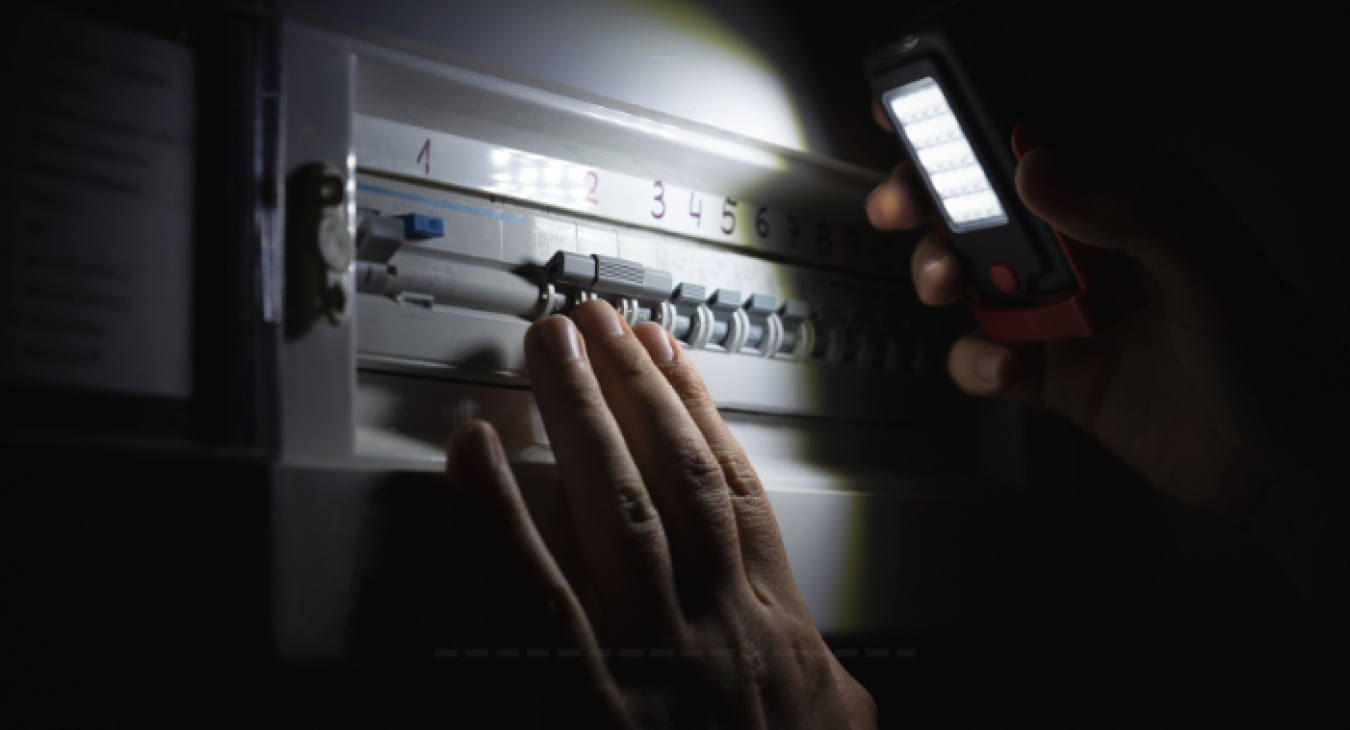
Signs you need a fuseboard upgrade
If your DERBY home is more than 20 years old and has the original fuseboard or consumer unit then it may well need an upgrade, or at least, an electrical safety inspection.
Back to top1) Why upgrade a fuse board?
Did you know that like most equipment, technology, and components a fuse board does not last forever? This equipment does not fail spectacularly one day and simply refuse to work; components can degrade over time with no outwards signs and may not operate when you need them most!
There are number of reasons to upgrade a fuse board such as:
- Safety improvements
- Newer Technology
- Required before building works
- To allow more room for future expansion
- To prevent unexpected failure in older units
- Fire protection
- Electric Shock Protection
2) What does a Fuse board do?
I’m glad you asked. The fuse board is the most critical part of the electrical system. It is the reason that our wiring can be nice and thin rather than huge cables to each switch, socket, and light fitting, it is responsible for safely dividing up the mains supply into useable “circuits”, keeps us safe from electric shock, limits electrical fire risk, prevents cables from overheating or catching fire and generally is the unsung hero of our homes and businesses.
Back to top3) How long does a Fuse Board last?
The lifespan of a fuse board or consumer unit depends greatly upon its living conditions. A damp, dusty, hot, cold or everchanging environment is likely to reduce the lifespan of the box and its components. Generally speaking, the maximum lifespan of modern fuse boxes and consumer units is around 25 to 30 years maximum.
After this period of time, the manufacturer’s expected lifespan has been exceeded and the trip switches may not operate when they are required to leaving you exposed to possible electrical dangers.
Back to top4) What are trip switches?
For several decades, fuse boxes, consumer units, electrical panels, distribution boards (very similar names for very similar equipment) have had switches installed that trip off when a fault is detected. These trip switches perform different tasks, are selected carefully by your electrician for their properties and performance and are designed, above all, to keep you and your electrical system safe from harm.
Back to top5) What is an RCD?
Perhaps the most important electrical component in the fuse box is the Residual Current Device (technical I know). This device is responsible for detecting possible electric shocks and snapping the power off in lighting quick time!!
When a fault is detected by the RCD, the switch will operate in less than 0.3 seconds (if it’s working properly… old Fusebox?). These switches are so quick that many of them operate much more quickly than that!
An RCD detects stray electrical currents that may have leaked away from your wiring and assume that the stray current is flowing through a person or animal.
Back to top6) What is an SPD?
A Surge Protection Device (SPD) is a device intended to protect the electrical system, your appliances, the wiring, and those around you from surges in the electrical supply. These devices are now commonplace in new electrical installations. The relatively low cost of these devices makes them a no brainer for installation when upgrading a Fusebox.
Back to top7) Contact us
If you are worried that your fuse box may be out of date, old or potentially dangerous then get in touch with us and we will discuss your requirements with you. There is a vast array of products available on the market and we will always install the most suitable equipment for your installation and needs.
Back to top